
Uganda has a growing water problem. Either there is too much of it or too little. Either there are floods or there is a water shortage. A few weeks ago, HOREMI, too, was in danger of running dry.
Since late 2024, HOREMI has had its own “borehole,” a simple hand-operated pump well. However, just a few months after it was built, the first repairs to the well shaft wall and pump were already necessary—as well as the first deepening of the well shaft from 17 to over 20 meters.
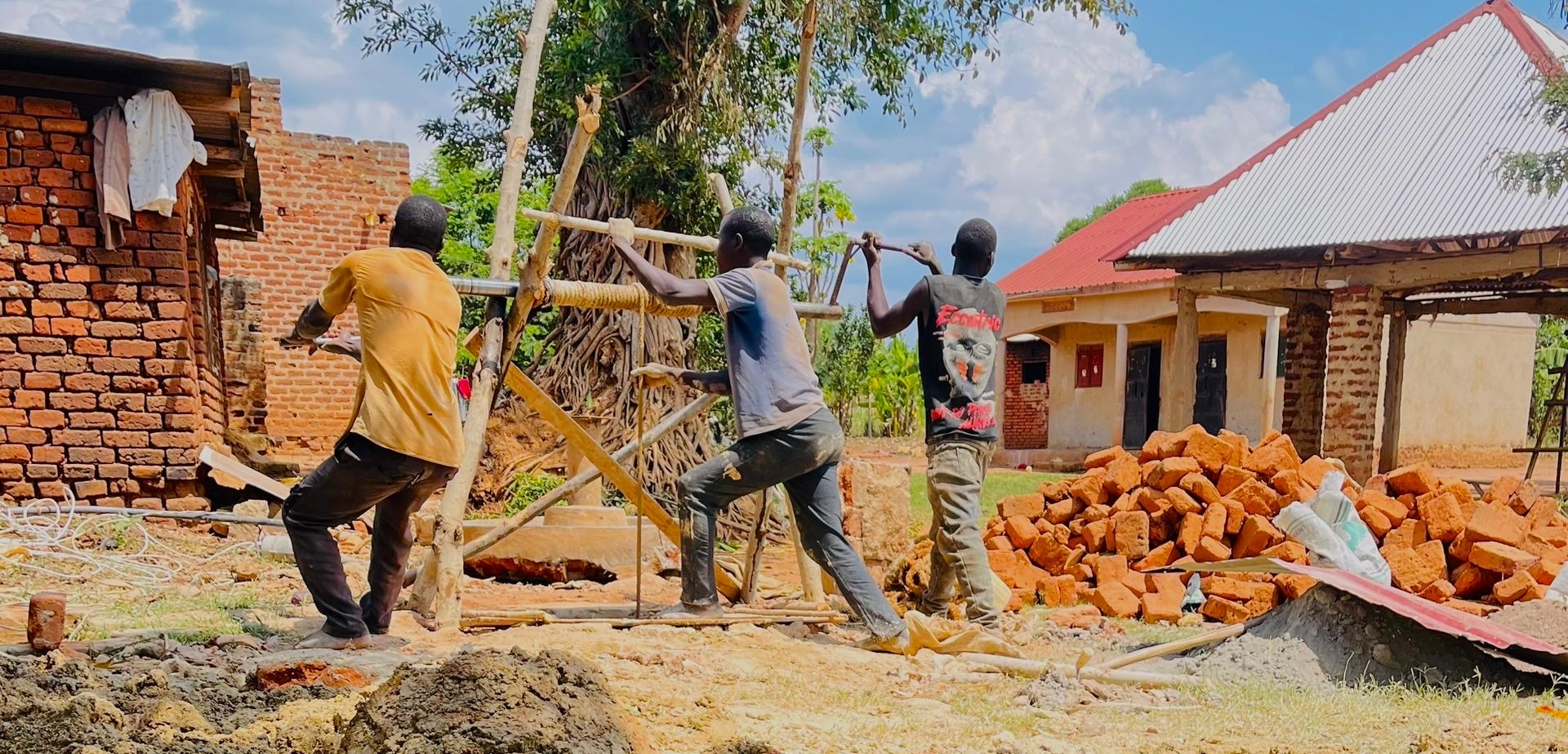
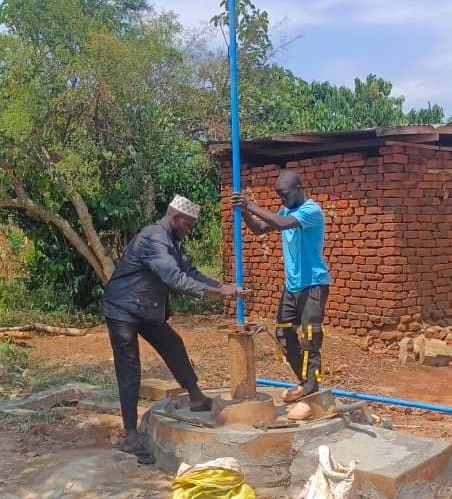
Over the course of this year, the water flow became scarcer again, until it nearly dried up completely in June. As an immediate solution, HOREMI had no choice but to deepen the existing borehole once more. It took over seven additional meters to reach drinkable water. The necessary financial support for this came once again from the “Friends of HOREMI”—that is, from you, the donors. And no sooner had the money been received than the workers arrived with materials, tools, and a good dose of courage …

man can continue digging at the bottom of the shaft, which is over 20 meters deep.
Climate change is likely a major cause of the water shortage. Prolonged dry spells prevent the replenishment of groundwater. When the long-awaited rain finally comes, it increasingly takes the form of violent flash floods, which not only wash away soil and crops but can also destroy infrastructure and contaminate near-surface groundwater.
In addition, the crystalline rock underground is not very permeable, which is why wells often refill only slowly after water is drawn from them. And there are significant regional differences in deep groundwater: In the Buyanga area, where HOREMI is located, groundwater coverage is only 32 percent, while in Namalemba—less than 20 kilometers away—it is 95 percent.
In total, there are 565 official water points in the Bugweri district; however, some of them have been abandoned because they dried up permanently or because maintenance and repairs were too expensive. At the same time, due to the growing population, water demand and the number of illegal boreholes are increasing dramatically, which is also placing chronic strain on groundwater reserves.
The drying up of the HOREMI well was likely due to a combination of all these factors. Although the Ugandan government and aid organizations are working to improve the water supply—reportedly, new water pipes, storage tanks, and solar-powered pumps are planned—there is no sign of any of this in the vicinity of HOREMI.
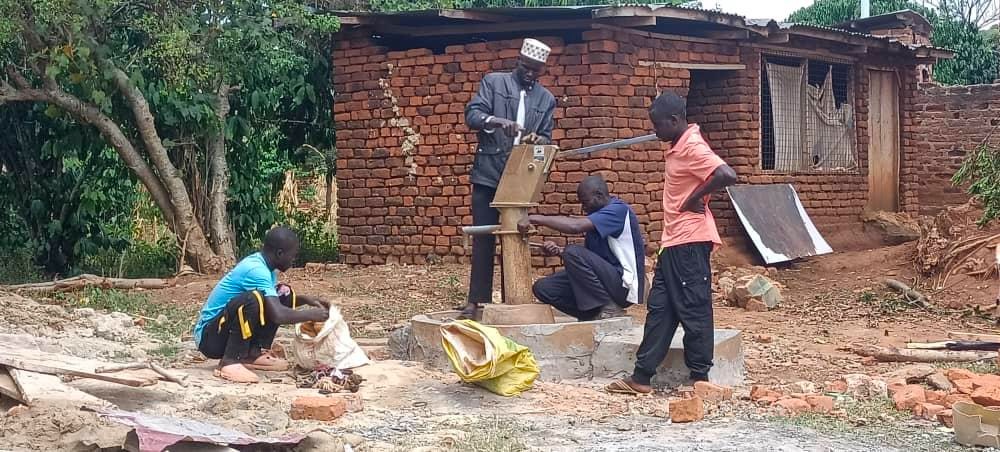
Deepening a well shaft cannot be repeated indefinitely and is a very laborious and dangerous procedure, as noted in our article from March 2025. While digging an additional three meters was successful during the first upgrade, this time it took over seven meters. This brings the total depth of the well shaft to about 27 meters (that’s equivalent to a 9‑story high building!), which does not make pumping the water any easier.
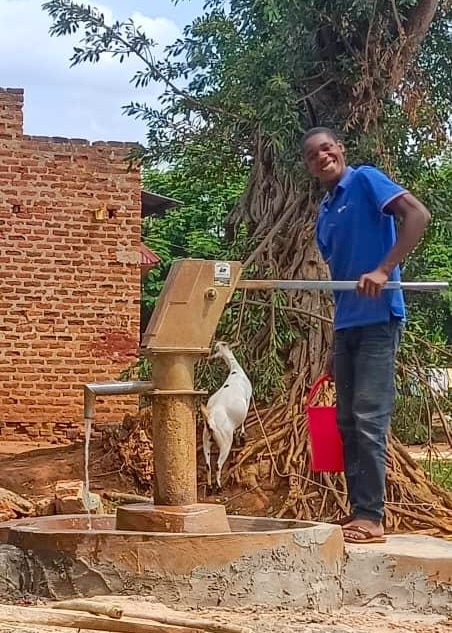
Nevertheless, there is great relief at HOREMI that the precious, life-sustaining water is now flowing again. Let’s hope that climate change and falling groundwater levels don’t put this problem back on the agenda anytime soon …
Would you like to give the children of HOREMI a helping hand? You can donate quickly and easily here. Thank you very much!
You can find all the ways to support HOREMI on our donations page.